
There are concerts—and then there are nights that feel like the closing of something sacred.
That was the atmosphere in Nashville as fans gathered for what had already been announced as the final “Last Call” show of Alan Jackson. Long before the first note was played, there was a sense in the air that this would not be just another performance. It would be a farewell not only to a man’s touring career, but to an entire era of country music that he helped define.
For nearly four decades, Alan Jackson stood as one of the genre’s most steadfast voices. His songs did not rely on spectacle or shifting trends. They told stories—about love, loss, faith, working-class life, and the quiet dignity found in everyday moments. From “Remember When” to “Chattahoochee,” his music became part of people’s lives in a way that few artists ever achieve.
So when Nashville prepared to say goodbye, it was always going to be emotional.
But no one expected what came next.

The Announcement That Changed Everything
Just hours before the show, whispers began to spread through the crowd and across social media.
Then it was confirmed.
George Strait would be joining him.
And not just him.
Lainey Wilson too.
In an instant, the meaning of the night shifted. What had been billed as a farewell became something far bigger—a once-in-a-generation moment where the past, present, and future of country music would stand side by side on one stage.
Fans understood immediately.
This wasn’t just a concert anymore.
It was history unfolding in real time.
A Legacy Built Without Compromise
Alan Jackson’s career has always been rooted in authenticity. At a time when country music faced constant pressure to evolve toward pop sensibilities, he remained grounded in traditional sounds—steel guitars, fiddles, and lyrics that reflected real lives rather than manufactured images.
In many ways, he became a guardian of the genre’s identity.
That role became even more visible with songs like “Murder on Music Row,” his collaboration with George Strait—a song that openly challenged the direction of the industry and defended the heart of traditional country music.
So when Strait’s name appeared alongside Jackson’s for this final show, it felt symbolic.
Not just two artists sharing a stage.
But two voices that had protected something important—together, one last time.
The King Steps In
When George Strait finally walked onto the stage, the reaction was immediate and overwhelming.
The crowd didn’t just cheer.
They erupted.
Known for his calm presence and understated delivery, Strait didn’t need theatrics. His mere presence carried decades of influence, respect, and quiet authority. Standing beside Alan Jackson, the moment felt almost surreal—two legends who had shaped the sound of country music for generations, now sharing what could be their final stage together.
There was no need for a long introduction.
The music spoke.
And when the first chords rang out, time seemed to collapse.
The Bridge to the Future
Then came Lainey Wilson.
Her arrival added another layer to the night—one that extended beyond nostalgia. Wilson represents a new generation of artists who have embraced country music’s roots while carrying it forward in a modern landscape.
Her presence wasn’t just a guest appearance.
It was a statement.
That the traditions Jackson and Strait fought to preserve are not fading—they are evolving, living on through voices that still understand where the music comes from.
Standing between them, Wilson didn’t look out of place.
She looked like part of the story.
A Crowd That Knew What It Was Seeing
Inside the venue, thousands of fans stood shoulder to shoulder, many of them having followed these artists for decades. Some had grown up with their music. Others had discovered it later. But all of them understood the weight of the moment.
This was not just entertainment.
It was memory.
It was identity.
It was the soundtrack of lives lived—weddings, road trips, heartbreaks, and quiet nights that only a good song could fill.
And as the performances continued, the emotional undercurrent grew stronger.
Because everyone knew:
There would not be another night like this.

The Songs That Carried Generations
The setlist unfolded like a journey through time.
Classic after classic.
Songs that needed no introduction.
Voices rising from the crowd, sometimes louder than the artists themselves.
When Alan Jackson sang, it felt like a conversation with the past. When George Strait joined in, it felt like that past being honored and reinforced. And when Lainey Wilson added her voice, it felt like a promise that the story would continue.
There were no elaborate visuals.
No distractions.
Just music.
And sometimes, that is enough.
The Final Minutes
But it was in the final minutes of the night that everything changed.
The lights softened.
The band slowed.
And a quiet realization began to settle over the crowd.
This was it.
Alan Jackson stood at the center of the stage, looking out at the audience—not as a performer surveying a crowd, but as a man taking in a lifetime.
George Strait stepped beside him.
Lainey Wilson stood close.
For a moment, no one spoke.
Then the final song began.
It wasn’t just another hit.
It was a choice.
A song that carried meaning not just for Jackson, but for everyone in the room.
As the melody unfolded, voices broke.
Some fans sang through tears.
Others simply stood still, unable to process what they were witnessing.
Because this was more than a closing number.
It was a goodbye.
When the Tears Came
And then it happened.
That moment everyone had been holding back.
The realization that this chapter was ending.
You could see it in the crowd.
In the way people held onto each other.
In the way phones lowered, as if recording suddenly felt less important than simply being present.
On stage, even the artists seemed affected.
Not dramatically.
Not performatively.
But in small, human ways.
A pause.
A glance.
A breath taken just a little more slowly than usual.
A Farewell That Felt Personal
When the final note faded, the silence that followed was almost as powerful as the music itself.
Then came the applause.
Not explosive.
Not chaotic.
But sustained.
Respectful.
Grateful.
It was the sound of thousands of people saying thank you—not just for one night, but for years of music that had shaped their lives.
Alan Jackson didn’t rush off stage.
He stayed.
Taking it in.
Letting the moment exist.
Because some moments are too important to hurry.
More Than an Ending
In the end, what made that night unforgettable was not just who was on stage.
It was what they represented.
Alan Jackson: the voice of tradition, honesty, and storytelling.
George Strait: the steady force that carried country music through decades of change.
Lainey Wilson: the proof that the roots still matter—and still grow.
Together, they created something rare.
A moment where time didn’t feel divided into past, present, and future—but connected.
What Remains
As fans slowly left the venue, there was a quiet understanding shared among them.
They had witnessed something that could not be repeated.
Not because of production.
Not because of scale.
But because of meaning.
There are concerts.
And then there are nights like this.
Nights that feel like the closing of something sacred.
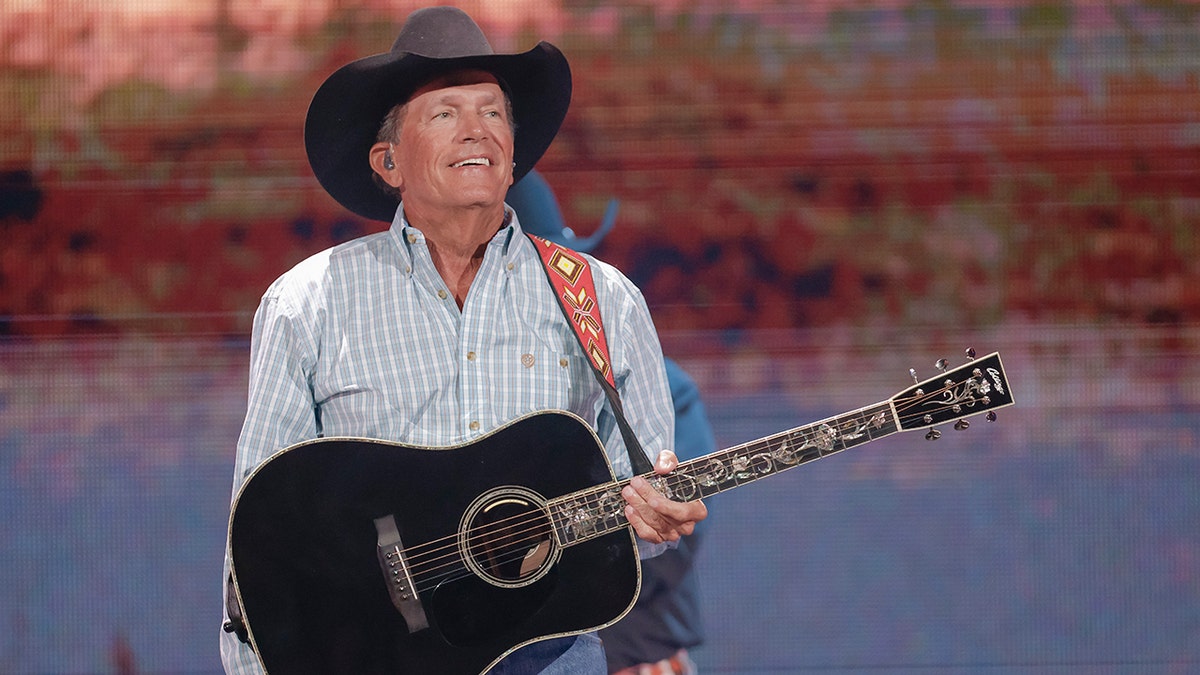
And in those final minutes in Nashville, as Alan Jackson stood beneath the lights with George Strait and Lainey Wilson beside him, country music didn’t just say goodbye.
It reminded everyone why it mattered in the first place.